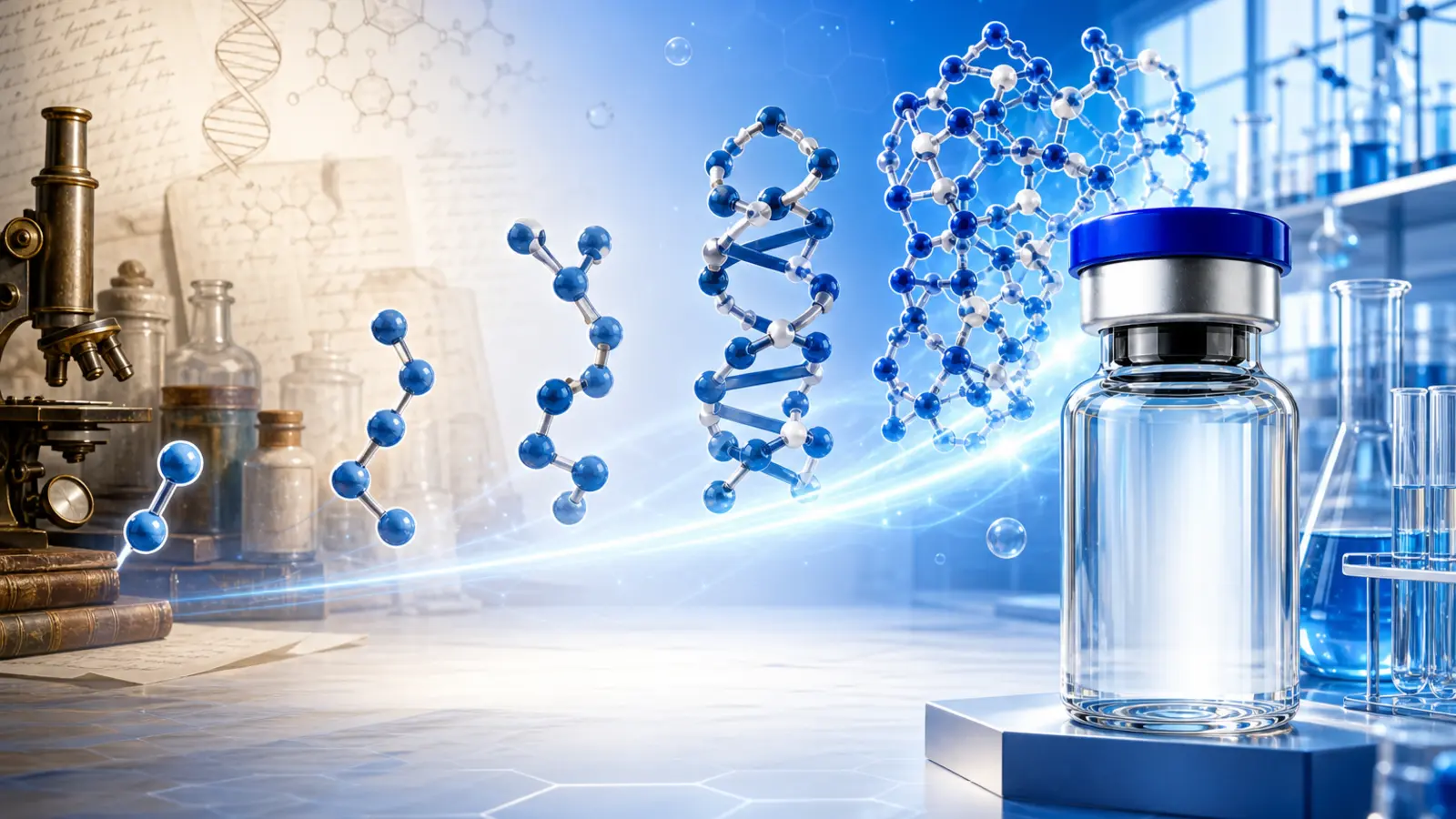
Peptides play an important role throughout biology and have been studied by scientists for decades. These molecules consist of short chains of amino acids and serve as signaling compounds throughout living systems.
Today, peptide research spans a wide range of scientific disciplines, including endocrinology, cellular biology, neuroscience, immunology, and metabolic research.
Early Discoveries
Scientists began identifying naturally occurring peptide hormones during the twentieth century. As analytical technology improved, researchers gained a deeper understanding of how peptides function within biological systems.
These discoveries helped establish the foundation for many modern areas of biochemical and pharmaceutical research.
Why Peptides Are Important
Peptides act as signaling molecules that help cells communicate. Researchers study peptides to better understand:
- Cellular communication
- Hormonal pathways
- Immune system signaling
- Neurological pathways
- Metabolic processes
Because peptides are involved in so many biological systems, they remain an active area of scientific investigation.
Advances in Modern Research
Modern laboratory techniques have dramatically improved peptide synthesis, purification, and analytical testing. Researchers can now investigate peptide structures and interactions with greater precision than ever before.
Technologies such as HPLC analysis, mass spectrometry, and advanced manufacturing processes have contributed to higher quality research materials and improved scientific understanding.
The Future of Peptide Science
Peptide research continues to grow as scientists explore new compounds, signaling pathways, and biological mechanisms. Ongoing advances in biotechnology and analytical science are expected to expand the role of peptides in laboratory research for years to come.
Research Use Only. Not for human or animal consumption.