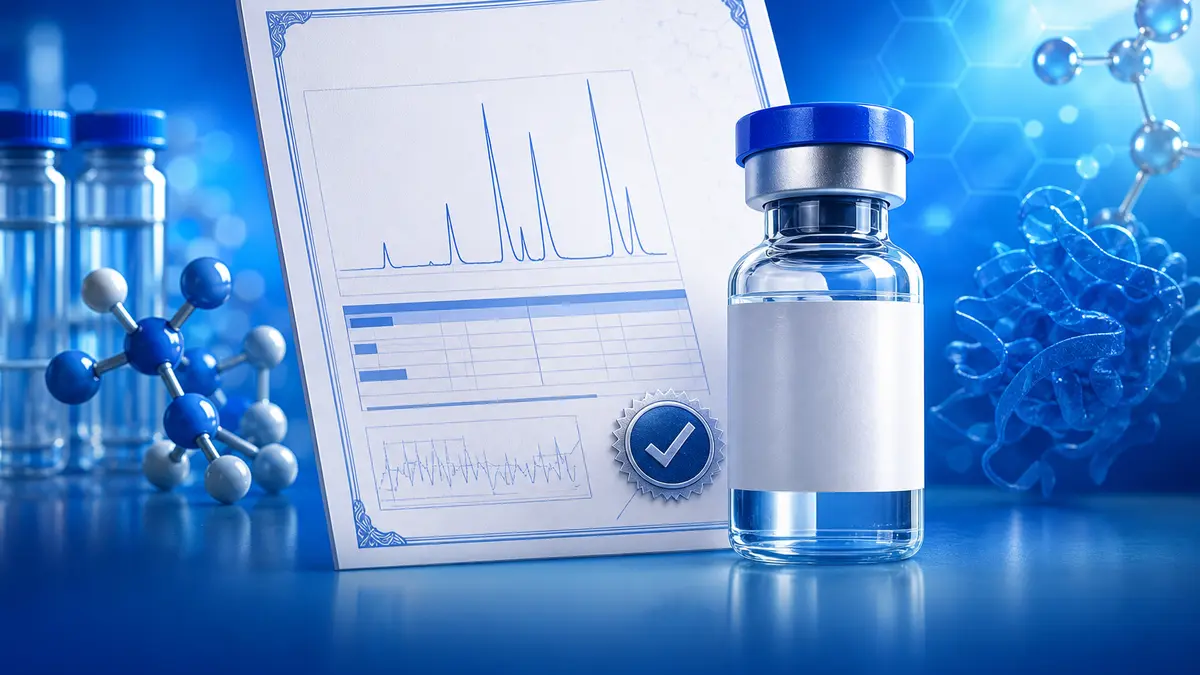
A peptide can be very pure and still be the wrong peptide. That sounds strange, so let us unpack it, in plain English.
Purity vs. Identity
There are two different questions a good lab report answers:
- Purity = how clean is it? (Covered in what purity means.)
- Identity = is it actually the molecule the label says?
You could have a jar that is 99% full of a single, very clean substance, but if it is the wrong substance, the purity number does not help you. That is why identity gets its own test.
The "Fingerprint" Check
To confirm identity, labs use a tool called a mass spectrometer. In simple terms, it weighs the molecule very precisely. Every peptide has a known, expected weight based on its recipe. If the measured weight matches the expected weight, the identity is confirmed, a bit like matching a fingerprint or a DNA test.
If the weight is off, it is a red flag. It could mean the peptide is missing a piece, has something extra attached, or is simply not what the label claims.
What This Looks Like on a COA
On the lab report you will usually see two weights side by side: the expected weight and the found (measured) weight. When they match closely, the peptide's identity checks out. You do not need to do any math. You are just looking for "these two numbers agree."
Why It Matters
Purity and identity work as a team. Purity says "it's clean," identity says "it's the right thing." A trustworthy COA shows both. If a document only shows a purity percentage and never confirms identity, that is worth questioning.
Common Questions
Do the two weights have to match exactly? They need to match within a small, normal margin. Instruments are not infinitely precise, and that is expected.
Is identity more important than purity? Neither replaces the other. You want both confirmed.
New here? Begin with what a COA is, then see how to read one step by step.
Sources
- U.S. Food & Drug Administration / ICH Q6A: identity and testing standards
- U.S. Pharmacopeia: peptide quality testing standards
Research Use Only. Not for human or animal consumption. This article explains lab paperwork for laboratory research and is not medical, dosing, or usage advice.