TB-500 shows up constantly in tendon and joint recovery discussions, but there's a distinction that rarely gets made clearly: almost everything cited as "TB-500 research" was actually conducted on a different, larger molecule. Understanding that difference is the key to reading this compound's literature accurately.
Everything below describes preclinical and laboratory research. TB-500 is not FDA-approved, is on the World Anti-Doping Agency's monitoring list, and research-grade TB-500 sold by peptide suppliers is intended strictly for in-vitro and laboratory research use, not for human or animal consumption.
TB-500 vs. Thymosin Beta-4: An Important Distinction
Thymosin beta-4 (Tβ4) is a naturally occurring 43-amino-acid protein found throughout mammalian tissue, where it regulates actin cytoskeletal dynamics — the machinery cells use to change shape and migrate. TB-500 is a synthetic 7-amino-acid fragment (Ac-LKKTETQ, corresponding to residues 17–23 of the full protein) that captures Tβ4's active actin-binding domain in a smaller, easier-to-synthesize package.
This matters for interpreting the research: the human clinical trial data that exists for this pathway — including Phase II/III ophthalmic trials and a 2025 cardiac trial — was conducted using the full-length Tβ4 protein, not the TB-500 fragment. TB-500-specific data is overwhelmingly preclinical: cell culture and animal studies. The fragment retains the mechanistically active core of the parent molecule, but it has no comparable human trial program of its own as of this writing.
The Core Mechanism: Actin Regulation
Thymosin beta-4's primary molecular function is sequestering G-actin (the monomeric building block of the cell's structural actin filaments), regulating how much is available for new filament assembly. This single function underlies several downstream effects relevant to tissue repair:
- Cell migration — coordinated actin assembly and disassembly is what allows cells like fibroblasts and endothelial cells to migrate toward an injury site.
- Angiogenesis — new blood vessel formation via endothelial cell migration and tube formation, through a mechanism distinct from BPC-157's growth-factor-receptor-mediated angiogenic pathway.
- Anti-inflammatory signaling and reduced apoptosis — Tβ4 has been shown to calm inflammatory signaling and inhibit programmed cell death in injured tissue, creating conditions more favorable for repair.
What Preclinical Musculoskeletal Research Shows
In animal models of tendinopathy and tendon transection, Tβ4 administration improved histological appearance, increased collagen alignment, and enhanced the biomechanical strength of healing tendon tissue. In skeletal muscle injury models, it appeared to recruit progenitor cells, enhance myoblast migration, and reduce fibrosis (scar tissue formation) — a particularly relevant finding for tendon healing specifically, since excess fibrosis is a major cause of impaired function after tendon injury.
| Study | Model | Finding |
|---|---|---|
| Malinda et al., 1999 | Cell migration assay | Tβ4 significantly increased endothelial cell and keratinocyte migration |
| Philp et al., 2004 | Murine wound model | Tβ4 accelerated wound healing with improved tissue organization |
| Sosne et al., 2002 | Corneal alkali injury | Tβ4 reduced inflammation and fibrosis, improved healing |
| Ehrlich & Bhatt, 2000 | Dermal wound healing | Tβ4 enhanced fibroblast migration and wound closure |
A 2021 comprehensive review in Frontiers in Endocrinology (Xing et al.) synthesized this body of work, describing how Tβ4 accelerates healing in muscle, tendon, and ligament injury models by stimulating cell migration, increasing blood supply, and reducing scar tissue — and noted that animal studies have also shown improved blood flow to damaged limbs and support for cartilage and intervertebral disc cell regeneration.
TB-500 vs. BPC-157: Different Angiogenic Mechanisms
TB-500 and BPC-157 are frequently studied and stacked together, and it's worth being precise about why: they promote blood vessel formation through genuinely different pathways. TB-500's angiogenic activity works through actin cytoskeleton regulation in endothelial cells. BPC-157's angiogenic activity is better characterized as growth-factor-receptor-mediated (notably via the VEGF receptor 2 pathway) and is generally reported as the more pronounced angiogenic effect of the two in comparative preclinical literature. This mechanistic difference is the research rationale behind combination-protocol interest, though controlled studies directly testing the combination (rather than each compound individually) remain limited. See our related piece on BPC-157 and TB-500 complementary research applications.
Handling and Documentation for Research Use
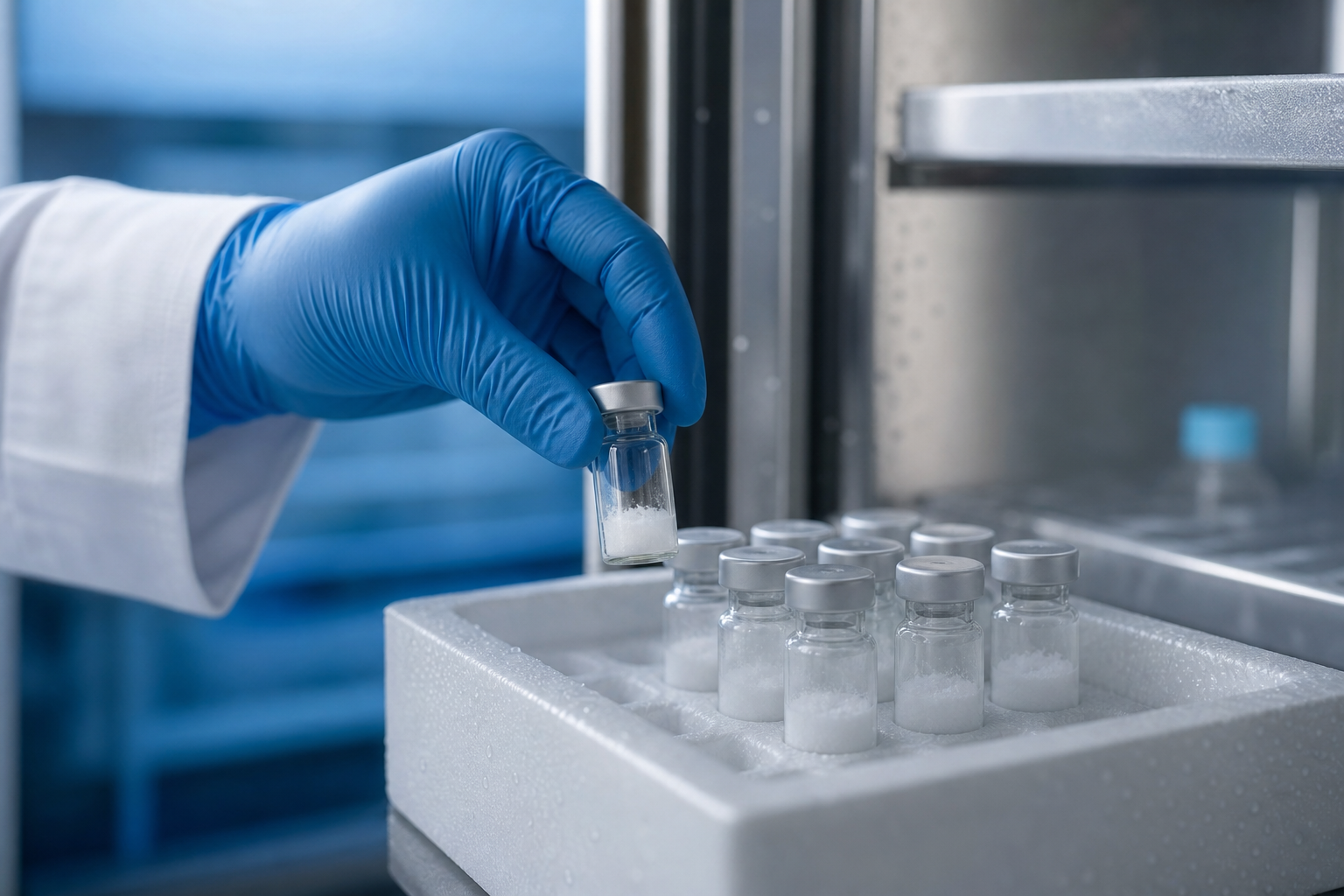
TB-500 requires bacteriostatic water reconstitution and cold-chain storage consistent with other lyophilized research peptides. See our peptide storage and reconstitution guide, with vial-specific protocols for 5mg and 10mg vials, blend protocols like BPC-157/TB-500 10mg and 20mg, and the combined TB-500 + BPC-157 stack protocol. The research volume helper covers concentration math for any vial size.
Third-party HPLC testing confirms batch identity and purity; see our guide on how to read a peptide COA, check documentation with the COA lookup tool, and review our research compliance page. Current TB-500 vial sizes are listed on the TB-500 product page.
What the Data Doesn't Yet Tell Us
The single largest gap in TB-500's research base is the absence of any published human clinical trial using the TB-500 fragment specifically. The available human data for this biological pathway all comes from full-length Tβ4 (the ophthalmic and cardiac trials referenced above), and it is not established that TB-500's smaller fragment produces identical effects, dosing requirements, or safety profile in humans. TB-500's musculoskeletal evidence, while consistent in direction across multiple animal studies, also varies in effect size and replication depth by tissue type, and head-to-head dosing comparisons between TB-500 and full-length Tβ4 in the same model are not well established in the published literature.
Common Questions
Is TB-500 the same thing as thymosin beta-4? No. TB-500 is a synthetic 7-amino-acid fragment of the 43-amino-acid Tβ4 protein, capturing its active actin-binding region. They are related but distinct molecules with different levels of research characterization.
Has TB-500 been tested in human clinical trials? Not TB-500 specifically. The human trials often cited in TB-500 discussions (ophthalmic and cardiac trials) used full-length thymosin beta-4, not the TB-500 fragment.
Is TB-500 banned in sports? It is monitored by the World Anti-Doping Agency, which is a separate consideration from its research/laboratory legal status. This is not relevant to laboratory research use.
Why is TB-500 often studied alongside BPC-157? The two compounds promote angiogenesis through mechanistically distinct pathways (actin regulation versus growth-factor-receptor signaling), which is the scientific rationale for combined-protocol research interest, though dedicated combination trials remain limited.
Glossary
Actin: A structural protein that forms the cytoskeleton cells use to change shape and move; TB-500's core mechanism involves regulating available actin monomers.
Angiogenesis: The formation of new blood vessels from existing ones, critical for supplying oxygen and nutrients to healing tissue.
Fibrosis: Excess scar tissue formation during healing, which can impair function in tendons and other connective tissue; several Tβ4 studies report reduced fibrosis.
Tenocyte: The specialized fibroblast cell type responsible for producing and maintaining tendon tissue.
References
- Xing, Y., et al. (2021). Comprehensive review of thymosin beta-4 in tissue repair applications. Frontiers in Endocrinology.
- Malinda, K.M., et al. (1999). Thymosin beta-4 accelerates wound healing. Journal of Investigative Dermatology.
- Sosne, G., et al. (2002). Thymosin beta 4 promotes corneal wound healing and modulates inflammatory mediators in vivo. Experimental Eye Research.
- Philp, D., et al. (2004). Thymosin beta 4 promotes angiogenesis, wound healing, and hair follicle development. Mechanisms of Ageing and Development.
Research Use Only. Not for human or animal consumption.